
If you have an Android device and the files will not show up on a Windows PC, there are several fixes that can be done.
This applies to both older Windows 10 and new Windows 11, as the steps are the same for both.
If you are using an app to copy files, it is usually best to uninstall it.
There is no need to use an app as Windows is able to see and copy files from an Android smartphone.
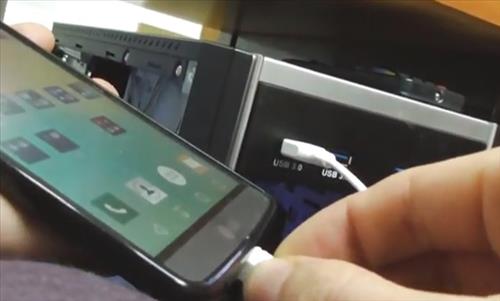
Possible causes of the files not showing up are the Smartphone, USB Cable, Settings, and the Windows PC.
Quick Tip: Newer Android phones (Android 10 and above) default to Charging Only when plugged into a PC and will not show any files until File Transfer is turned on from the phone.
The phone also needs to be unlocked, as a locked phone will not share files with a PC.
Does Windows See the Android Device?
To see if your Windows PC recognizes the smartphone go to Device manager.
Type in Device manager at the bottom bar and click on it.

When the Android Smartphone is plugged in, it should show up under Portable Devices.
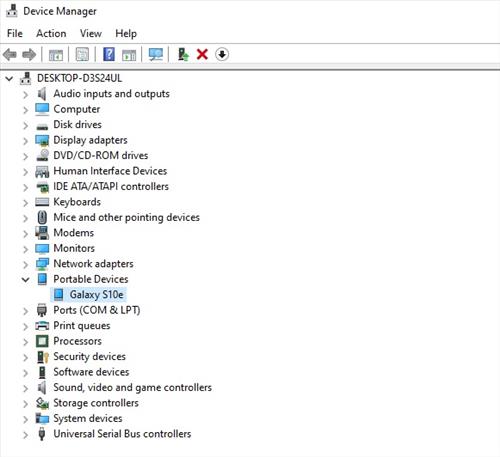
If the smartphone does not show up, there is likely a problem with the USB connection or the phone is set to Charging Only.
Where Will the Files be located?
The files on an Android smartphone can be seen in Windows File Explorer.

The path will be This PC–>Phone Name–>Internal storage–>DCIM.
On some phones the internal storage will be labeled Phone instead of Internal storage.
If you are copying pictures you took with a smartphone’s camera they will be in the camera folder.
Fixes when Android Files Do Not Showing Up on a PC
- Unlock the Phone
- Allow Access for USB File Transfer
- Pull down the top of the screen and tap the USB notification. It will say Tap for Other USB Options or Charging this device via USB depending on the phone.
- Be sure Transferring Files / Android Auto is selected. On some phones it is simply called File Transfer or MTP.
- Go to Settings–>About phone and tap Build number 7 times to turn on Developer Options.
- Go to Settings–>System–>Developer options (on Samsung phones it is Settings–>Developer options).
- Scroll down and tap Default USB configuration.
- Select File Transfer.
- Use Another USB Port
- Check the Connections
- Be Sure the USB Cable is a Data Cable
- Use Another Data Cable
- Update MTP Drivers
- Plug in your Android Smartphone and type in Device Manager at the bottom bar and open it.
- Click on Portable Devices.
- Right Click the Phone and select Update Driver.
- Click Browse My Computer For Drivers.
- Click Let me pick from a list of Drivers.
- Select MTP USB Drivers and Click Next.
- The MTP Drivers should install or update.
- Restart the Phone and the PC

Android will not share files with a PC while the screen is locked.
Unlock the phone with your PIN, pattern, or fingerprint before plugging it in, and keep it unlocked until the files show up in File Explorer.
Newer versions of Android (Android 15 and above) will also ask for your fingerprint or PIN before the USB mode can be changed, so be ready to unlock it again when prompted.

When the Android smartphone is first plugged into a PC USB port, it will popup with Allow Access To Your Data (some phones say Allow access to phone data).
Be sure to click Allow or the PC will not see any files.
If you do not see an Allow Access To Your Data popup, it can be checked by plugging in your phone and pulling the menu down from the top of the phone.
It should display USB for File Transfer; if not it can be quickly changed.
How To Change USB the File Transfer Option on Android Smartphone


The USB options can also be found by going to Settings–>Connected devices–>USB.
How To Make File Transfer the Default USB Option
If you copy files often, the phone can be set to always use File Transfer instead of asking every time.
Keep in mind the phone still needs to be unlocked for the files to show up, and some phones such as Samsung may reset this option after an update.

USB ports can sometimes be finicky and a device will often work on another USB port.
The USB ports on the back of the computer go directly to the motherboard without an internal cable making them often the best USB ports to use.
If the PC has both USB-A and USB-C ports, try the other type of port with a matching cable.

Check the connections and be sure the cable is inserted well in each port.
Often a smartphone case can stop a cable from being inserted all the way, causing a problem.
Removing the case temporarily to copy files is sometimes necessary depending on the phone and case.
Lint and dust can also build up inside the USB-C port on the phone and stop the cable from making a good connection, so check the port and clean it out with a wooden toothpick if needed.

Some USB cables for a smartphone are only built to charge.
This is very common with USB-C cables, as many cheap USB-C cables sold for charging do not have the wires needed to transfer data.
A Data cable can both charge and transfer data and is often thicker than a power-only cable.
The USB cable that comes with the smartphone is usually a Data cable.
Many new phones no longer come with a cable in the box, so if you bought a cable separately check that it is listed as a data cable or a USB 2.0/3.0 cable and not charging only.
Data cables can go bad, especially ones not built well or overly used a lot.
Using another cable can often solve the problem and allow for files to be copied.
Most Data cables that come with the phone are well built but often 3rd party cables can be cheaply built causing connection problems.
The MTP Drivers (Media Transfer Protocol) is what allows files to be transferred, including pictures and videos.
This includes all the major Windows releases, such as Windows 10 and Windows 11.
If the Drivers are not installed or corrupted files will not display or copy over to a Windows PC.
How To Install or Update MTP Drivers


If the phone shows up in Device Manager with a yellow warning icon and the MTP driver will not install, run Windows Update and check under Optional Updates for a driver, as Windows 11 often lists the phone driver there.
If nothing else works, unplug the cable, restart both the phone and the PC, then plug the phone back in and allow file transfer again.
This clears out a stuck USB connection which is a common cause of the phone showing up but no files being listed.
Summary
If you are having issues coping files such as pictures or videos from your Android smartphone, there are several fixes to check.
First, be sure the phone is unlocked and set to File Transfer, since newer Android phones default to Charging Only.
Next, be sure you have a good USB connection and that the cable is a data cable, as many USB-C cables are charge only.
Switching to another USB port often fixes the problem.
Windows also may have a Driver issue that needs to be installed or updated, mainly the MTP Driver.
Have you had issues copying files from an Android smartphone? Let us know your thoughts below.
My 2026 new phone couldn’t connect to the win 11 device (connected with sound-noti, no broken port issue or any warning like that showing) but it works in win 11 laptop so… IDK, need more extra steps.
I have the same problem as Ken. I have done everything mentioned and its still not working. Help!
I have the same issue. I guess my Windows is broken, cos everything is fine on Windows 10 and my PC at work. I don’t know how, but Win 11 breaks apart by doing NOTHING!
I had same problem. finding the device driver and updating/installing fixed the problem for me.
Do you need to give permission on your phone to allow the computer to access it? Might be the problem.
Tried everything !!! nothing happens … My computer does not show any cel phone … I have a second computer where everything goes ok … The windows system is the same … i do not know what to do
Interesting is that it was working BUT suddenly it started failing ! and now i can plug any cel phone ! no one works
It seemed that was after uninstalling a antivirus program Total AV and Avast
Followed all your instructions. This PC shows Android device connected, device folders display, but all device folders are empty. And I have lots of images. Tried different cables, tried different USB ports, all permissions enabled — same result.
T_T It didn’t work. I swear, I’m so frustrated I wanna smash my damn phone on a wall.