
Ethernet cable has become faster along with better speeds over the years with constant improvements.
This includes how the wires are wrapped and shielded to reduce errors, cross talk, block outside interference, and more.
Ethernet cable is rated by a category number called Cat, with all newer versions being backward compatible.
The higher the Cat number, the better the performance. The rated performance of each Cat type is the difference between all the different numbers.
Home networks have changed a lot since this post was first written, with multi-gig internet plans and 2.5Gbps ports now common on new gear.
Below is an updated look at each cable type for 2026 and which one makes the most sense for gaming or streaming.
Ethernet Cable Types and Performance
- Cat-5:
- Cat-5e
- Cat-6:
- Cat-6a:
- Cat-7:
- Cat-8:
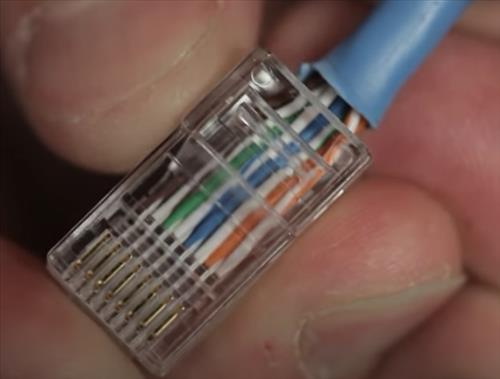
Performance 100Mbps at 100 Meters 100MHz bandwidth.
Used in older networks and no longer installed on new networks.
If you find plain Cat-5 already run in the walls of an older home, it is worth replacing since it caps out at 100Mbps.
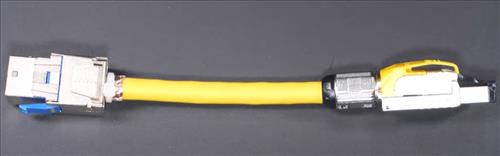
Performance 1000Mbps at 100 Meters 100MHz bandwidth.
Cat-5e (Cat-5 Enhanced) is widely used in networks due to cost vs performance.
It has a much better performance compared to standard Cat-5 and is the first Gigabit Ethernet.
It will also usually run 2.5Gbps on a good short-to-medium length run, which matters now that many new routers and motherboards have 2.5Gbps ports.
Performance 10Gbps at 55 Meters 250MHz bandwidth.
Cat-6 gives a big improvement in performance over Cat-5e. Cat-6 cables are more tightly wound and often have a plastic spline running down the center to keep the pairs separated.
Most Cat-6 sold is unshielded, but shielded versions are available which help prevent crosstalk and noise interference from outside sources such as wireless signals.
Cat-6 cable has speeds up to 10Gbps, but only up to 55 meters or roughly 180 feet.
It will still do 1Gbps, 2.5Gbps, and 5Gbps at the full 100 meters, which covers almost any home run.
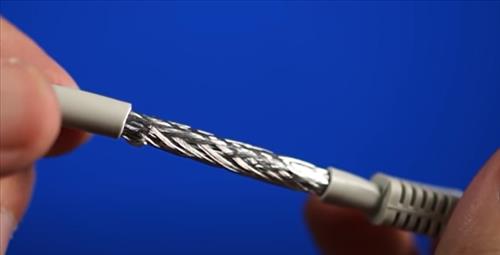
Performance 10Gbps at 100 Meters 500MHz bandwidth.
Cat-6a (Augmented) can support twice the maximum bandwidth than standard Cat-6 and can maintain higher speeds over longer distances.
The trade off is that Cat-6a is thicker and stiffer, which can make it harder to pull through walls or bend behind a desk.
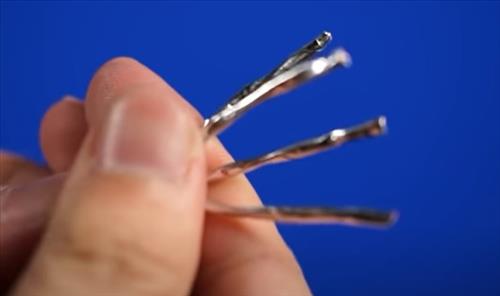
Performance 10Gbps at 100 Meters 600MHz bandwidth.
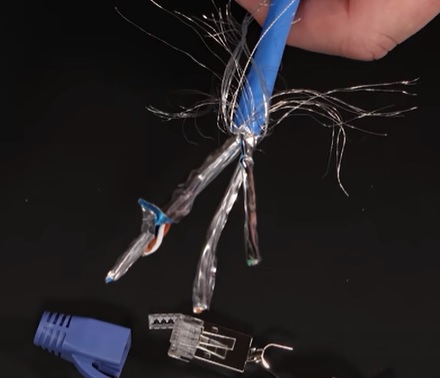
Cat-7 has very high specifications, with each pair of wires individually shielded as well as the entire cable.
This helps to greatly reduce crosstalk and outside interference.
One thing worth knowing is that Cat-7 is not a recognized TIA standard in North America, and true Cat-7 was designed around GG45 and TERA connectors instead of the standard RJ45.
Almost every cable sold as Cat-7 with normal RJ45 ends is really shielded cable performing at Cat-6a levels, so you are mostly paying for the extra shielding.
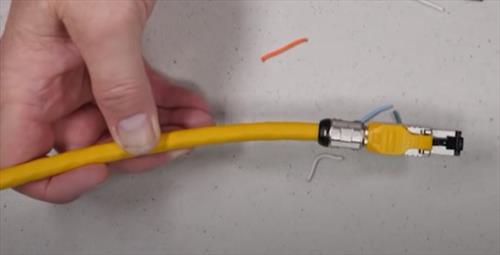
Performance 25Gbps-40Gbps at 30 Meters 2000MHz bandwidth.
Cat-8 is the newest Ethernet standard available with very high performance. It is always shielded and costs more compared to other versions.
The catch is distance. Cat-8 only holds 25Gbps-40Gbps out to 30 meters or roughly 98 feet, which is much shorter than the 100 meters every other type is rated for.
Past that length it simply falls back to 10Gbps and acts like Cat-6a.
It was designed for short runs between servers and switches in data centers, and there is currently no home router or gaming PC that can actually do 40Gbps over copper.
What Speed Can Your Gear Actually Use?
This is the part that has changed the most since this post was first written.
For years almost every router and motherboard had a 1Gbps port, so Cat-5e was all anyone needed.
Now 2.5Gbps ports are standard on most new Wi-Fi 7 routers and on a lot of gaming motherboards, with 10Gbps ports showing up on higher end models such as the ASUS RT-BE96U or the TP-Link Archer GE800.
Here is the important part. A network only runs as fast as its slowest piece.
That means the router port, the switch, the port on your PC or console, and the cable all have to support the speed before you see it.
A game console is a good example, since the PlayStation 5 and Xbox Series X both have 1Gbps ports and will never go faster no matter which cable you plug in.
Ethernet Cat Type vs. Performance vs. Costs
Buying the newest and fastest Ethernet cable type will not boost performance in most households.
The costs of the higher Ethernet cable types do not make sense for most homes.
Internet speeds have come up a long way, with the median fixed broadband speed in the United States now sitting at roughly 300Mbps.
That is a big jump from a few years back, but it is still well under the 1000Mbps that plain Cat-5e handles without any trouble.
Even a 2Gbps fiber plan is inside what Cat-5e or Cat-6 will do on a normal length run.
If your home does have a fast multi-gig plan, your router hardware will also need to be considered.
Of course, if you want fast internal LAN speeds and have a 10Gbps router, 10Gbps is achievable with Cat-6 on runs under 55 meters.
For a household that has a lot of wireless signals, such as close to a cell tower or a busy WiFi environment, shielded Cat-6a would be a good option.
If you are looking to future-proof a setup, a high Cat type will make good sense, but for those looking for quicker speeds right now, very high types will likely not make much difference.
Does Ethernet Cable Type Affect Ping or Lag?
This is probably the most common question gamers ask, and the short answer is no.
Ping is mostly decided by the distance to the game server, your ISP routing, and how busy your connection is.
The few feet of cable between your PC and router adds a tiny amount of delay that no one can feel.
Where cable does matter is reliability. A bad, damaged, or badly terminated cable causes packet loss and retries, and that will absolutely show up as lag spikes in a game.
So the goal is a good quality cable that is properly made, not the highest Cat number you can find.
Going from WiFi to any wired Ethernet cable is the real improvement for gaming, not going from Cat-6 to Cat-8.
What is the Best Ethernet Cable for Gaming or Streaming?
In my opinion, the best Ethernet cable type for gaming or streaming is still Cat-6a.
The costs for the higher types only make sense if you are trying to future proof your setup.
For example, Cat-6a can make sense for an installation in a home behind the walls which is hard to run.
Of course, if you have the money, Cat-7 or Cat-8 would be the best and fastest you can get even if you see no improvement.
Our Picks Best Ethernet Cable for Gaming or Streaming
- Cat-6a
- Cat-6
- Cat-8
For most households, Cat-6a will make the most sense with good speeds, future proof, and reasonable costs.
It does 10Gbps at the full 100 meters, so it covers any run in a normal home with room to spare.
This is also the type to use for anything going behind walls, since it is the last cable you will need to pull for a long time.
Cat-6 is the best value for patch cables between your PC, console, or router.
Prices are close to Cat-5e now, and it still handles 10Gbps on the short runs a desk setup uses.
For a cable going from a router to a gaming PC across a room, Cat-6 is all most people need.
Cat-8 is the newest latest version of Ethernet cable and currently the best available.
It does cost much more compared to other versions, and it is limited to 30 meters at full speed.
Cat-8 would only be a good fit in a home with very fast internet and 10Gbps router hardware, and even then Cat-6a would do the same job for less.
Things to Watch for When Buying Ethernet Cable
The Cat number on the bag is not the whole story, and there are a few cheap cables to stay away from.
- Copper Clad Aluminum (CCA):
- Solid vs Stranded:
- Flat Cables:
- Fake Cat Ratings:
Cheap cables often use aluminum with a thin copper coating instead of solid copper.
They have more resistance, fail more often on long runs, and are a fire risk with Power over Ethernet. Look for pure copper on the listing.
Solid copper is for permanent runs inside walls, and stranded copper is for patch cables that get moved and bent.
Flat cables are easy to run under a rug or door, but they lose the twisted pair geometry that blocks interference. They are fine short, less so long.
There are a lot of cables listed as Cat-7 or Cat-8 online that are not tested to that spec at all. Buying from a known brand is worth the small extra cost.
Is Cat-5, Cat-6, Cat-7 or Cat-8 Better for Gaming?
Cat-8 currently has the fastest transfer rate, but it will not give a performance boost to most gamers.
Cat-7 also is unlikely to give much of a boost compared to Cat-5e or Cat-6.
Cat-5e has a rated performance of 1000Mbps, while Cat-6 has a rated 10Gbps.
Since all networks are only as fast as the slowest components, almost all internet connections and consoles can not reach these speeds.
The cost to the benefit will not be there, but if a home needs to be future-proof, Cat-6a is the type to install.
Summary
Each home will have different Ethernet requirements, and what works for one home may not work for the next.
Unless you have very fast multi-gig internet and matching router hardware, having the newest Ethernet cable types will not show any improvement.
A router’s hardware will also need to handle fast speeds or will bottleneck.
If you want to future-proof, Cat-6a makes sense, especially if installed behind walls where it is hard to replace.
Of course, if costs are not a concern, Cat-8 would currently be the highest Ethernet version to buy, as long as the run stays under 30 meters.
What is the best Ethernet category version for you? Let us know in the comment below.
Great insights on the different types of Ethernet cables! I’ve been debating whether to invest in a Cat6 or Cat7 cable for my gaming setup. Your breakdown really helped clarify the benefits. Thanks for sharing!